Working Of Xylanases In Baking AIB: How to Use Xylanase in Baking Formulations
How xylanase works in baking formulations: dosage, pH, temperature, QC checks, supplier documents, and pilot validation for B2B buyers.
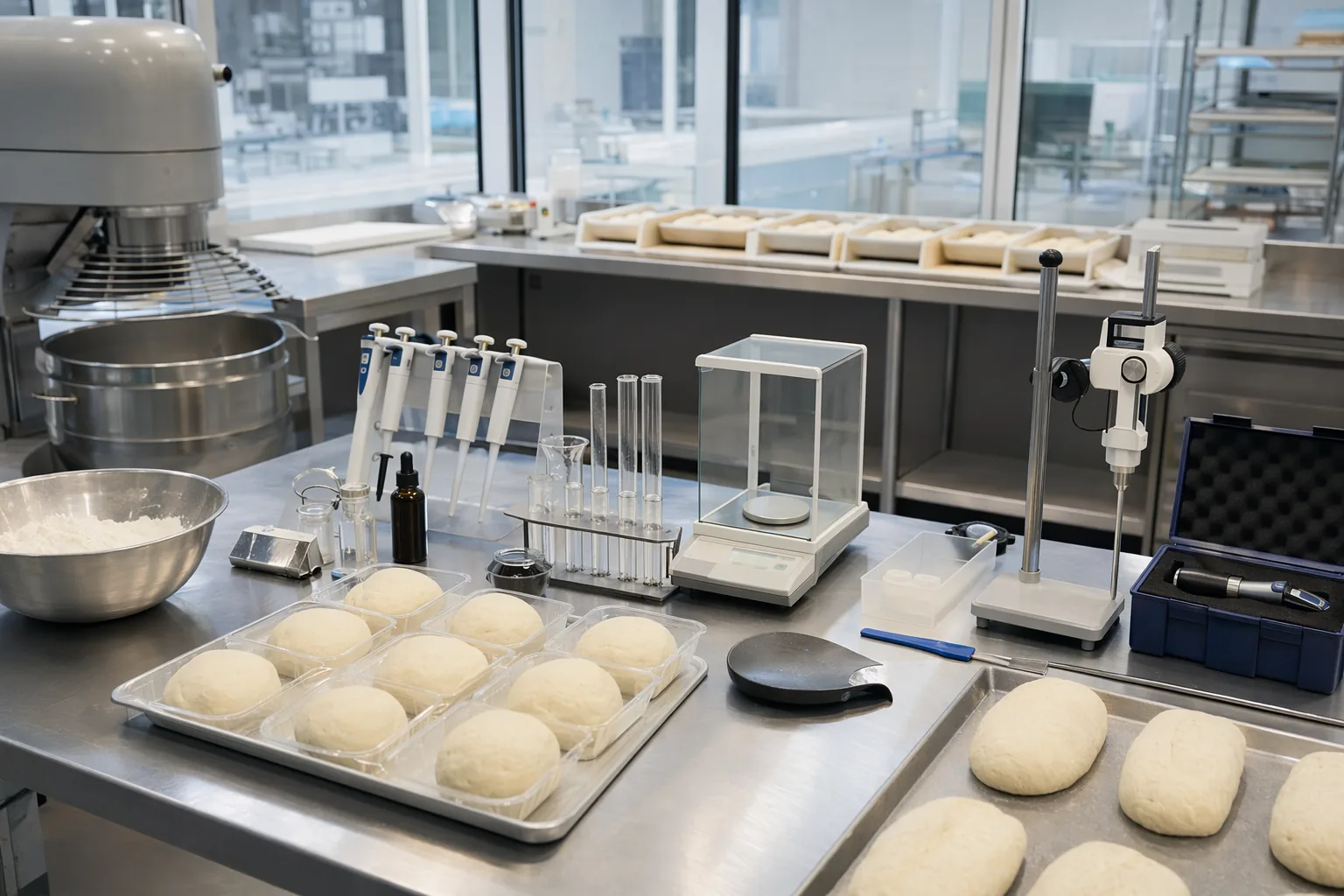
Xylanase helps bakeries and premix manufacturers optimize dough handling, loaf volume, crumb structure, and process consistency when it is matched to flour quality, recipe type, and proofing conditions. To request a quote, send the product, quantity and destination through the form on the home page.
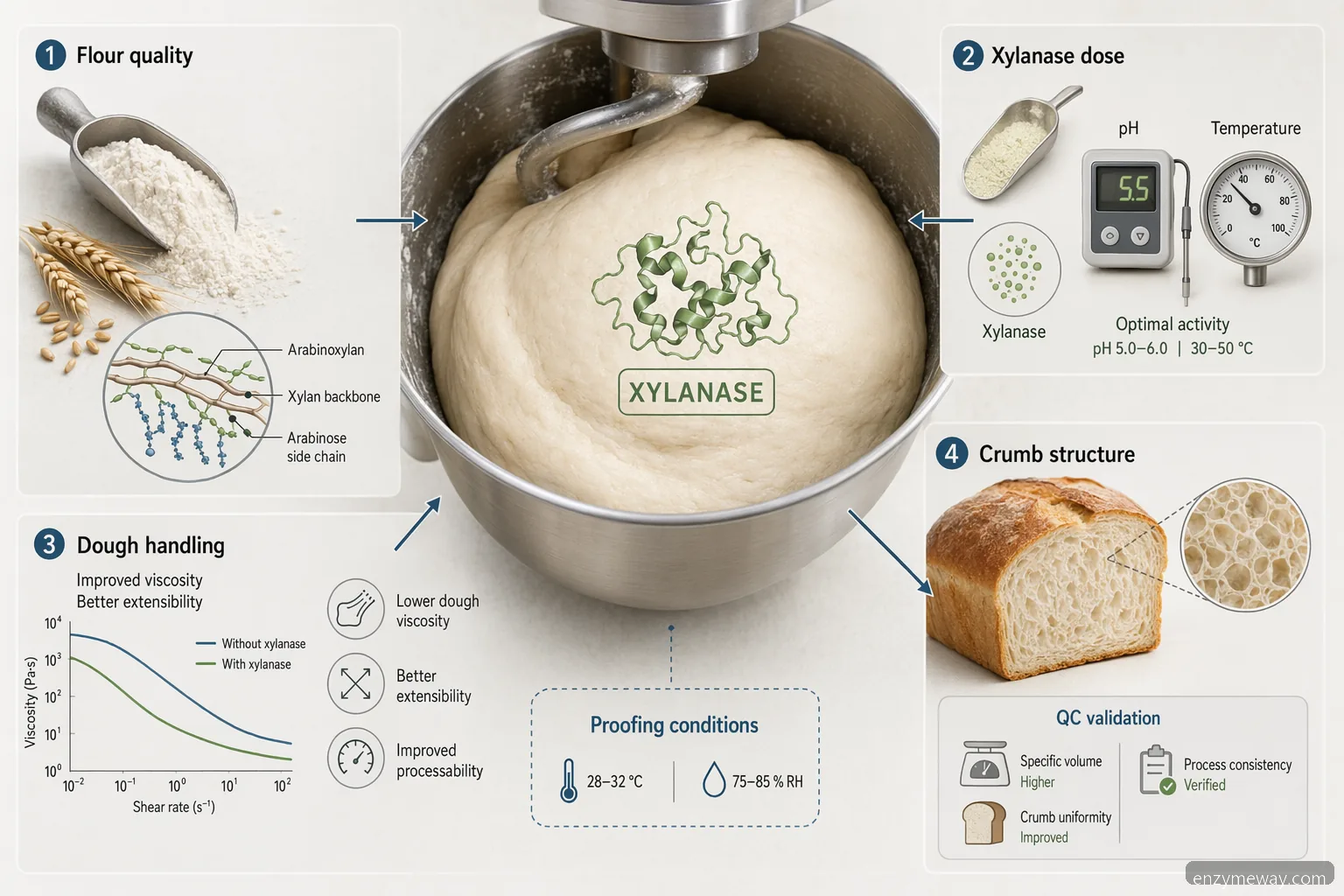
How xylanase works in baking systems
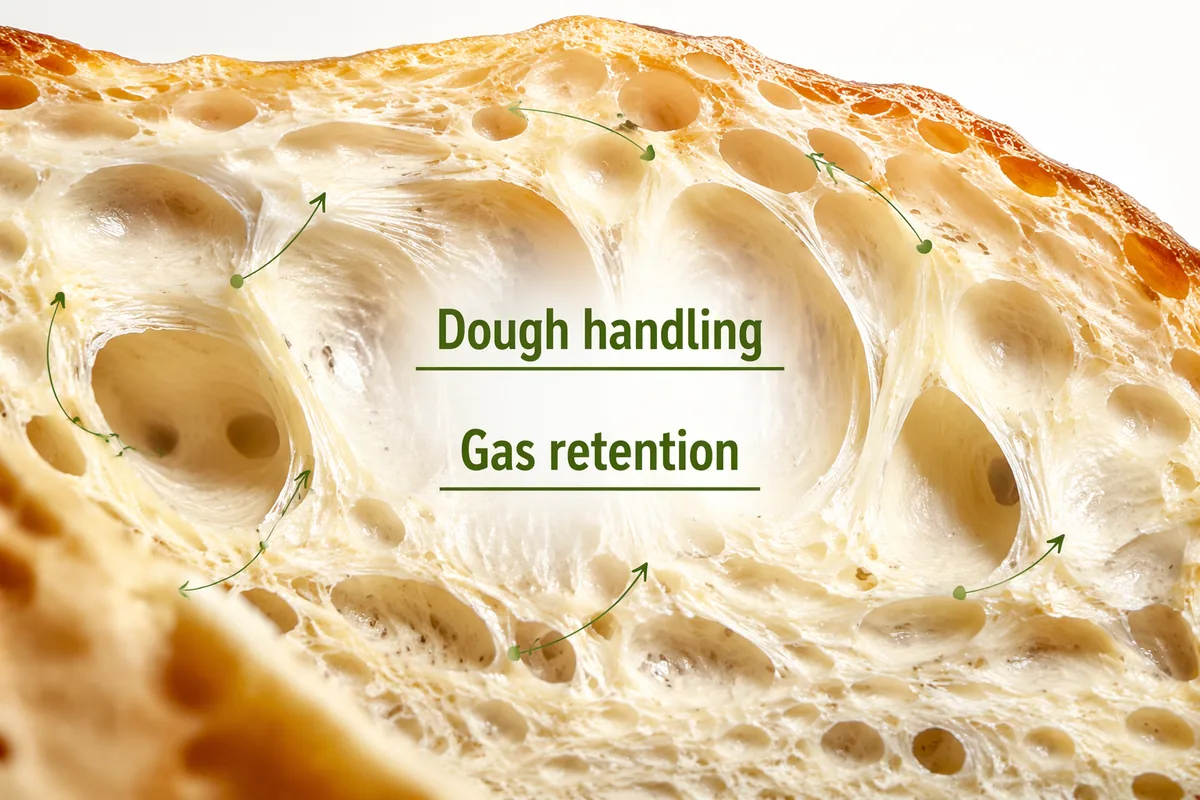
In wheat-based baking, xylanase targets arabinoxylans, also called pentosans, which bind significant water and influence dough viscosity. Controlled hydrolysis can release bound water, improve gluten development, and increase dough extensibility without making the dough sticky. This is the core working of xylanases in baking: the enzyme does not replace baking yeast, but it can help yeast-leavened dough retain gas more efficiently by improving dough rheology and cell wall flexibility. For pan bread, buns, rolls, flatbreads, and frozen dough, the right xylanase enzyme for baking may support better volume, finer crumb, and more consistent processing across flour lots. Over-treatment can weaken dough, reduce tolerance, or create gumminess, so enzyme strength, substrate specificity, and dosage must be aligned with the flour and line conditions.
Primary substrate: water-extractable and water-unextractable arabinoxylans • Main formulation goal: balanced dough strength, extensibility, and gas retention • Not a yeast substitute; it works alongside yeast and other bakery enzymes
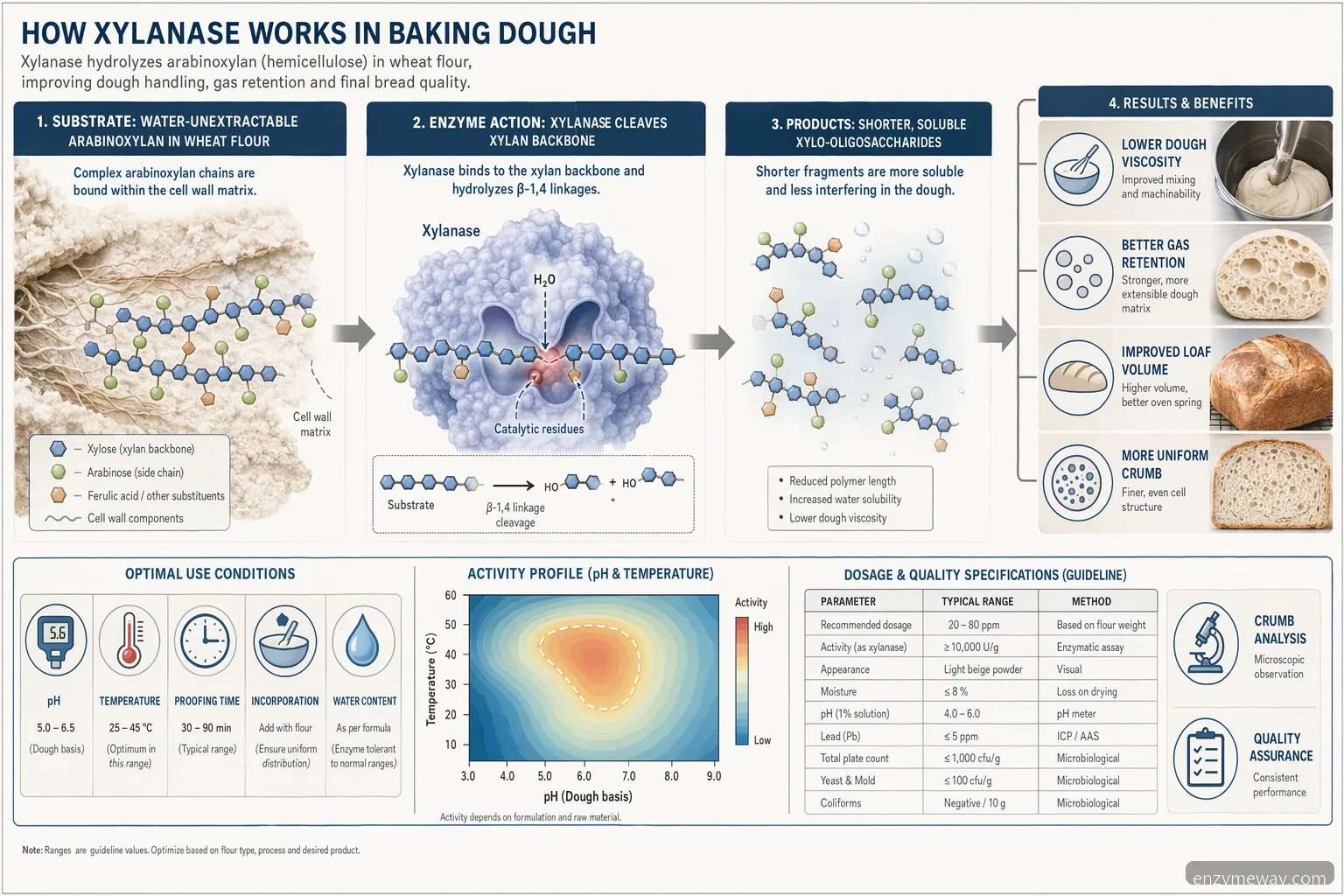
Recommended formulation conditions and dosage approach
Xylanase in baking is typically evaluated at very low inclusion rates because commercial products vary widely in activity, carrier, and concentration. A practical starting band is often 10 to 100 ppm of enzyme preparation on flour weight, or the supplier’s declared activity-based equivalent. For concentrated products, dosage may be lower; for premix dilution, dosage may be higher. Many fungal xylanases perform well around pH 4.5 to 6.5, which fits common dough systems, and show activity during mixing, floor time, and proofing before thermal inactivation during baking. Dough temperatures commonly range from 24 to 32°C, while proofing may be 30 to 40°C depending on the product. Because enzyme activity continues until heat denaturation, validate performance under the actual mixing time, water absorption, proof time, retarding, freezing, and baking profile used in production.
Start with supplier-recommended activity units, not only weight percentage • Run a negative control and at least three dosage levels • Confirm performance after flour changes and seasonal wheat variation
Compatibility with baking ingredients
A xylanase for baking should be selected as part of the full improver system, not as an isolated ingredient. It may be used with fungal alpha-amylase, maltogenic amylase, glucose oxidase, lipase, ascorbic acid, emulsifiers, vital wheat gluten, hydrocolloids, and reducing agents, but the combined effect must be measured. In strong flour, xylanase may improve extensibility and loaf symmetry. In weak flour, excessive xylanase may reduce dough tolerance, especially when paired with reducing agents or high hydration. Salt, sugar, fat, whole grain, bran, and fiber all change water availability and enzyme access to arabinoxylans. When comparing xylanase or baking yeast options, remember that yeast drives fermentation and gas generation, while xylanase modifies the flour matrix that holds that gas. The best result usually comes from balancing yeast level, proof time, oxidation, and xylanase dose together.
Check interactions with amylase, oxidants, emulsifiers, and gluten • Evaluate whole wheat and bran formulas separately from white bread • Monitor stickiness when hydration or proofing time is increased
Pilot validation and QC checks for bakeries
Before scale-up, run pilot bakes using production flour, plant water, standard mixing energy, actual yeast, and the same improver system used commercially. Measure farinograph or mixograph absorption, dough development time, stability, extensibility, proof height, pH, finished loaf volume, crumb grain, sliceability, moisture, and sensory texture over shelf life. For high-speed lines, include dough divider performance, sheeting behavior, pan flow, depanning, and crumb compression. For frozen or refrigerated dough, assess freeze-thaw stability, proof recovery, and enzyme activity after storage. QC should include incoming enzyme appearance, lot number, activity reference, moisture or loss on drying where relevant, and storage condition compliance. The working of xylanases in baking should be judged by repeatable production metrics, not by a single bench bake.
Use production-relevant flour lots and water quality • Record dough temperature after mixing and before proofing • Track loaf volume, crumb score, stickiness, and line stoppages • Repeat trials after enzyme aging or premix storage
Choosing a xylanase supplier for baking
A qualified xylanase enzyme supplier for baking should provide technical documentation and formulation support, not only a price per kilogram. Request a current Certificate of Analysis, Technical Data Sheet, Safety Data Sheet, recommended dosage range, enzyme activity method, storage stability, allergen and GMO-related statements where applicable, and country-specific regulatory status for food enzyme use. For purchasing decisions, compare cost-in-use rather than headline price, because concentration, activity, stability, carrier, and dosing accuracy affect the actual cost per ton of flour. Ask for pilot samples from commercial lots, shelf-life information for dry blends or liquid dosing systems, and guidance on handling dust or aerosols. Supplier qualification should also review batch traceability, change notification practices, manufacturing consistency, and responsiveness during plant trials.
Request COA, TDS, SDS, activity method, and storage guidance • Compare cost per ton of flour treated • Confirm support for pilot validation and scale-up troubleshooting • Assess traceability and change control before approving supply
Xylanase in Baking vs Baking Yeast: What to Compare
A common buyer question is whether to evaluate xylanase or baking yeast for a formulation challenge. They are not substitutes. Yeast ferments sugars to generate carbon dioxide and flavor compounds, while xylanase enzyme for baking modifies fiber structure to influence dough rheology and water release. If loaf volume is low because fermentation is insufficient, yeast level, yeast vitality, proofing time, and sugar availability should be reviewed. If dough is tight, flour absorption is inconsistent, or crumb is dense despite adequate fermentation, xylanase may be part of the solution. In enzyme systems, xylanase is often compared alongside amylase, lipase, glucose oxidase, and cellulase. The commercial decision should consider final product target, flour specification, line speed, improver system, clean-label objectives where applicable, and total cost-in-use rather than price per kilogram alone.
Yeast provides fermentation gas; xylanase modifies flour fiber functionality. • Xylanase can complement, not replace, standard yeast control. • Compare performance in the full improver system, not in isolation. • Use cost-in-use per metric ton of flour or finished dough for fair comparison.
Specification Checklist for Xylanase for Baking
When sourcing xylanase for baking, request a technical data sheet that states activity units, assay substrate, assay pH, assay temperature, physical form, carrier, solubility, recommended dosage, storage conditions, and shelf life. Activity units are not always interchangeable because suppliers may use different analytical methods. Buyers should therefore compare performance in a standardized pilot bake, not by unit number alone. Confirm the recommended dosage band, stated as ppm on flour weight, directly with the supplier. Ask whether the product is designed for straight dough, sponge and dough, frozen dough, steamed bread, buns, pan bread, or improver premix use. Also verify compatibility with oxidants, emulsifiers, salt, sugar, fats, and other enzymes in the formula.
Request COA, TDS, SDS, and batch traceability before approval. • Confirm the activity method and whether units are supplier-specific. • Check recommended dosage as ppm on flour, not only percent in premix. • Validate compatibility with existing bakery improver components.
Technical Buying Checklist
Buyer Questions
Xylanases hydrolyze arabinoxylans in wheat flour, changing how water is bound and distributed in dough. With the correct dose, this can improve dough extensibility, gas retention, loaf volume, and crumb structure. The effect depends on flour quality, hydration, mixing, proofing, and the rest of the improver system. Too much activity can weaken dough or create stickiness, so trials are essential.
No. Baking yeast ferments sugars and generates carbon dioxide for leavening. Xylanase is an enzyme that modifies flour arabinoxylans and helps the dough matrix handle water and retain gas. In many bread formulations, xylanase and yeast are used together. Adjusting yeast level alone will not deliver the same dough rheology effects as a properly selected xylanase.
A practical screening range is often 10 to 100 ppm of enzyme preparation on flour weight, but activity varies by supplier and product concentration. Always follow the supplier TDS and convert dosage to declared activity units where possible. Run a control, low, medium, and high dose in the actual flour and process, then confirm results in pilot or plant trials.
For B2B qualification, request a Certificate of Analysis, Technical Data Sheet, Safety Data Sheet, enzyme activity method, recommended dosage range, storage and handling instructions, lot traceability, allergen statement, and applicable food enzyme regulatory information for your market. Also ask about stability in premixes, change notification practices, and technical support for pilot validation.
Compare products by cost per ton of flour treated, not only price per kilogram. Include enzyme activity, recommended dose, dilution in premixes, dosing accuracy, shelf-life stability, freight, waste, and the measurable production benefit. A more concentrated or stable product can have lower cost-in-use even if its unit price is higher.
Request a Quote: Wholesale Supply for Bakeries, Improver Makers and Resellers
We supply xylanase to industrial bakeries, flour-improver and premix makers, ingredient distributors and resellers on a quote basis. The product on this site is Xylanase Enzyme Powder (EC 3.2.1.8): a light tan to brown powder in activity grades of 10,000 – 100,000 U/g, packed in 25 kg fiber drums or custom packaging. Prices are quoted per order.
To get a quote, send three things: the product and activity grade, the quantity per order or per month, and the destination country or port. Add your application and process conditions if you also want trial guidance with the quote.
Use the quote form on the home page or email hello@mail.enzymeway.com.
Xylanase for Research & Industry
Need Xylanase for your lab or production process?
ISO 9001 certified · Food-grade & research-grade · Ships to 80+ countries
Frequently Asked Questions
What is the working of xylanases in baking?
Xylanases hydrolyze arabinoxylans in wheat flour, changing how water is bound and distributed in dough. With the correct dose, this can improve dough extensibility, gas retention, loaf volume, and crumb structure. The effect depends on flour quality, hydration, mixing, proofing, and the rest of the improver system. Too much activity can weaken dough or create stickiness, so trials are essential.
Is xylanase the same as baking yeast?
No. Baking yeast ferments sugars and generates carbon dioxide for leavening. Xylanase is an enzyme that modifies flour arabinoxylans and helps the dough matrix handle water and retain gas. In many bread formulations, xylanase and yeast are used together. Adjusting yeast level alone will not deliver the same dough rheology effects as a properly selected xylanase.
What dosage of xylanase enzyme for baking should be tested?
A practical screening range is often 10 to 100 ppm of enzyme preparation on flour weight, but activity varies by supplier and product concentration. Always follow the supplier TDS and convert dosage to declared activity units where possible. Run a control, low, medium, and high dose in the actual flour and process, then confirm results in pilot or plant trials.
What documents should a xylanase enzyme supplier for baking provide?
For B2B qualification, request a Certificate of Analysis, Technical Data Sheet, Safety Data Sheet, enzyme activity method, recommended dosage range, storage and handling instructions, lot traceability, allergen statement, and applicable food enzyme regulatory information for your market. Also ask about stability in premixes, change notification practices, and technical support for pilot validation.
How should cost-in-use be calculated for xylanase in baking?
Compare products by cost per ton of flour treated, not only price per kilogram. Include enzyme activity, recommended dose, dilution in premixes, dosing accuracy, shelf-life stability, freight, waste, and the measurable production benefit. A more concentrated or stable product can have lower cost-in-use even if its unit price is higher.
What QC checks are useful when validating xylanase enzyme for baking?
Useful QC checks include flour moisture, protein, ash, damaged starch, water absorption, dough temperature, mixing tolerance, stickiness, extensibility, proof height, loaf volume, crumb grain, sliceability, and moisture. For long fermentation or frozen dough, include hold-time stress tests. Incoming enzyme batches should be checked against COA values and retained samples for traceability.
Ready to source?
Turn This Guide Into a Supplier Brief Contact EnzymeWay to discuss bakery xylanase selection, samples, documentation, and pilot validation for your formulation.
Contact Us to Contributehello@mail.enzymeway.com